For the Love of the Game (Market Commentary) |
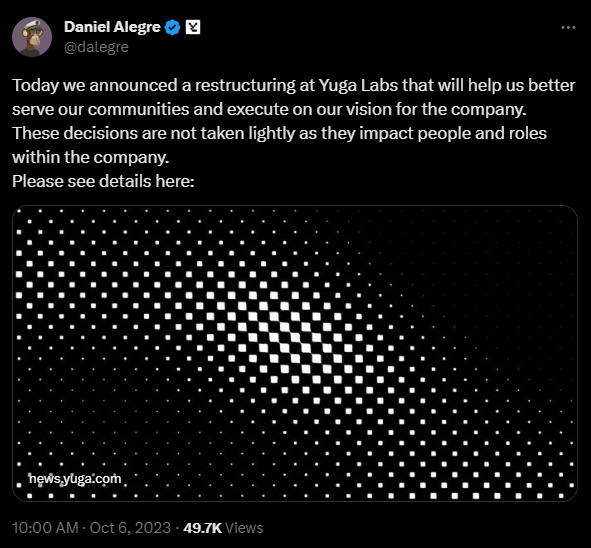
Floptober is in full effect in NFTs, with sales now falling for the seventh consecutive week. It’s not just the market that’s taking a beating this season, as some of NFT’s biggest native brands like Yuga Labs and Proof Collective last week announced substantial layoffs. Never before has the impact of the market’s downturn been more tangible. Along with their first major layoffs, Yuga Labs disclosed that they would be changing the core focus of their business. Instead of building auxiliary games in house, they’ll now turn entirely to third parties who bring more experience, and allow them to focus on their Otherside
metaverse and on the community. As the poster child or roadmap for NFT projects to follow, many projects followed Yuga Labs’ lead down the road of game development. But the difficulty of building fun and engaging games can’t be
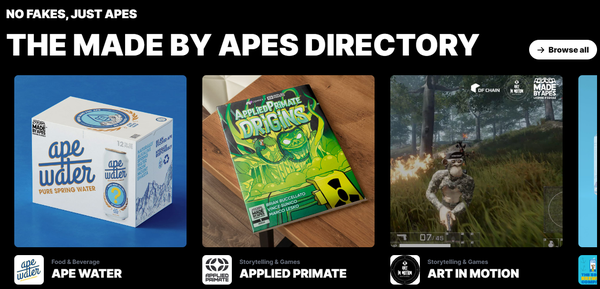
understated, and we’re now seeing where that game plan potentially leads. While Yuga Labs has resources to outsource future games and focus on their Made with Apes IP licensing platform, many projects went all in on gaming. It could prove to be a costly mistake.
The Pudgy Penguins are winning during this crypto winter with a similar dual tiered gaming and IP focused model, but their brute force marketing outside of the
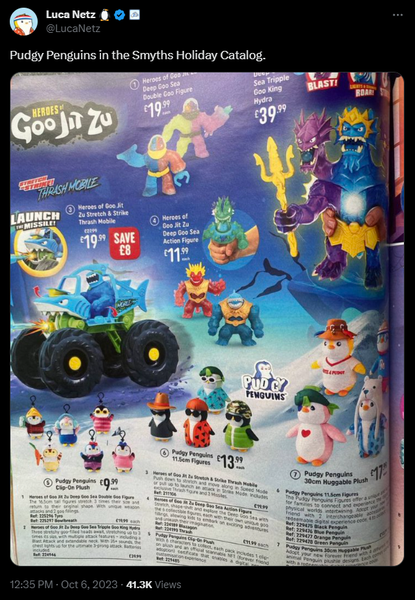
existing NFT community demonstrates that money can be raised in a bear market. Through viral social media campaigns and business savvy, Pudgy Penguins toys are now on shelves in 2,000 Walmart stores across the US, and as of last week, also in Smyths stores in the UK. So far 25% of Walmart’s Pudgy Penguins toy inventory has sold out, and although it’s impossible right now to know the value of those sales (the total Walmart supply is valued at around $300m) it’s safe to say that the Pudgy Penguins have crafted a recipe for success. This success translates directly to their NFT value, as the average Pudgy Penguin NFT price in October climbed to $8,875, up over 11% from January. NFT holders whose NFTs are featured as these toys also benefit each time their corresponding toy is sold, earning royalties which are currently estimated to be around $2,000 this year. The difference between Yuga Labs’ and Pudgy Penguins’ licensing platforms seems to
be that the Pudgy Penguins team does the heavy lifting to find deals for holders, while Yuga Labs serves as middle man for anyone who is ready to deal. In the end both strategies may work, but the real takeaway here is that the Pudgy Penguins are finding success that was elusive for most during a bear market. Both project’s current gameplans point to the importance of IP for NFT projects, with it being Pudgy Penguins main objective, and Yuga Labs now making it a much bigger focus. In the infancy of the new IP meta, we get to sit back and watch how today’s elite NFT businesses blaze a trail for the rest to follow. Future NFT builders, I hope you’re paying attention, because this is a road you’ll probably be
heading down soon. It will just be less bumpy thanks to the efforts of a few bored and weathered animals. The NFT market was down almost across the board last week, and will continue to decline until collectors find value. How low that can go depends on what’s
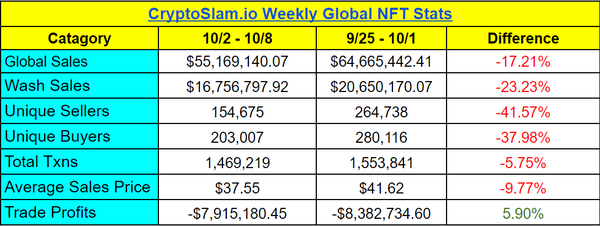
being offered by NFTs, but so far there’s not much being offered. Last week finished with just $55m in global NFT sales, marking the first time sales have fallen below $60m since the week of Feb 8th 2021. Unique sellers, buyers, and transactions all fell from the previous week, though all were still exponentially up from Feb 8 2021.
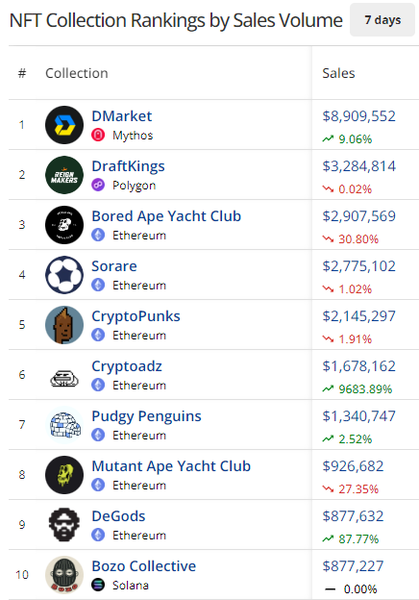
- DMarket and their gaming skin NFTs (CounterStrike, DOTA2, etc) saw over $8.9m in sales, again outperforming the #2 and #3 ranked collections combined.
- Cryptoadz are in the top ten this week thanks to a single “fat finger” 1,055 ETH sale of Cryptoadz #4030. The bid was actually intended to be 1.055 ETH.
- Pudgy Penguins sales are ramping up to over $1.3m this week, and have quietly climbed to the #19 ranked all-time NFT collection.
- DeGods are back in style again this week with $877k in, and a fresh new collection “reset” to look forward to.
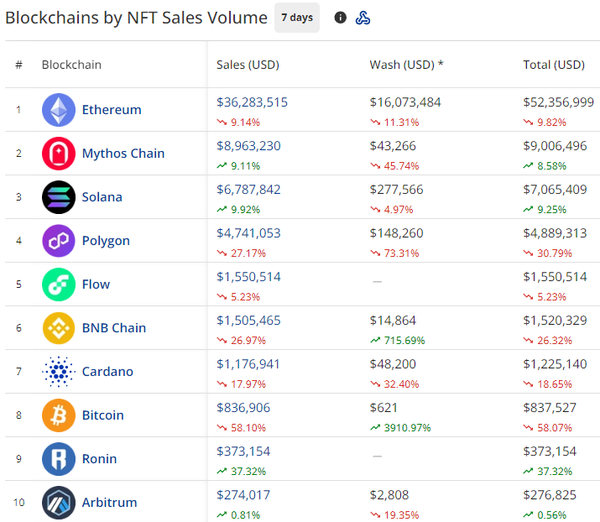
- Ethereum sales are down 9.14% this week to $36m, and washtrading continues
to fall as speculators still farm SoFi platforms.
- DMarket is again driving 99% of Mythos Chain’s $8.9m in sales, even with the launch of the blockchain’s latest game, Nitro Nation World Tour.
- Solana’s $6.7m in sales came from multiple collections that showed up in the 24 hour top ten last week including Bozo Collective, Reavers, and Fidelion.
- Polygon saw $4.7m in sales in a week where co-founder Jaynti Kanani announced that he would be stepping back from the “day-to-day grind”.
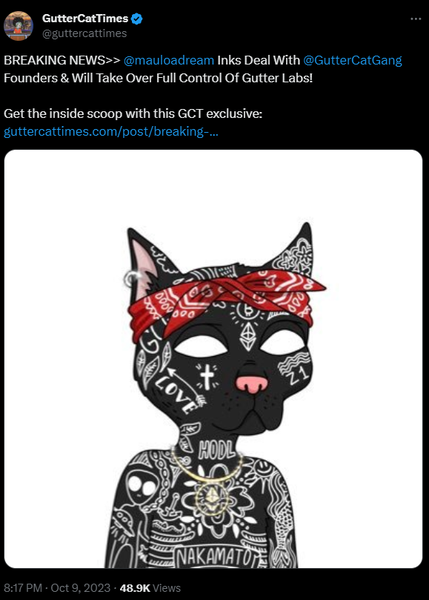
- Ownership of the Gutter Cats NFT collection was sold to Kingpin Noah, in a move that mirrors the Pudgy Penguins story.
- MoMA successfully launched NFTs on Tezos, which were not for sale. They will soon be releasing QR codes for more artists and
collectors to create their own NFT postcards through their platform.
- Polygon’s Y00ts collection will be joining DeGods on Ethereum in the next 2 weeks as part of DeLabs’ new Reset and Unify initiatives.
- Tezos’ Versum art marketplace announced that they will be shutting down their operations over the next few months.
- Rafik Anadol’s Winds of Yawanawa has began to reveal, and against typical trends, sales in the collection are priced higher post reveal.
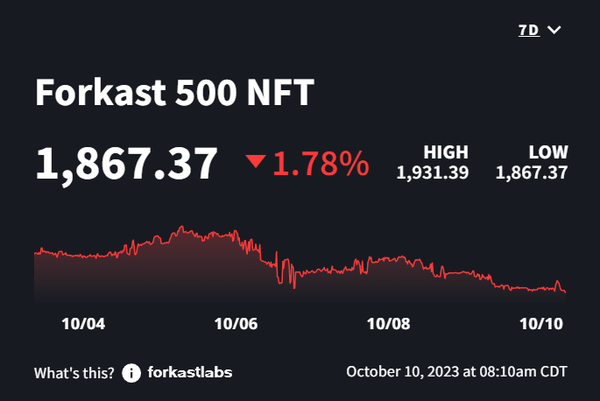
Just 21 days to go until you don’t have to hear the term “Uptober” for another year. But for now, bear with me. Floptober is unavoidable in NFTs as clearly demonstrated by the first third of the month. But while the NFT markets as a whole is down -1.78% in the past seven days,
Solana and Cardano have actually had an up week, finishing +0.49% and +1.09% respectively. Still, the story is low volume and low value. Keep an eye on real world events that are heating up this
week that will almost certainly have an impact on the NFT markets. Remember, crypto prices are often affected by war, and the value of NFTs right along with it. Have a MEGA GMs! |
A north star for much of Web3 is the ability to make tokenized assets usable in
multiple environments or ecosystems. Taking an avatar you own in a video game, and being able to use the same avatar across multiple other games, or owning digital furniture that you can use in all of your virtual properties are core examples of interoperability. In the current NFT community, most collectors hope to be able to use their assets across unlimited platforms in the future. Knowing this, you can begin to understand why some NFTs hold the value that they still hold. There’s plenty of
reasons for digital assets to be interoperable, so dive in to find all of the current use cases that creators are building around today. Happy
researching! Received this from a friend? Sign up for this twice-a-week CryptoSlam VIP newsletter. |
|