For the Love of the Game (Market Commentary) |
Gaming isn’t just a multi-billion dollar industry. It’s a $100 billion dollar juggernaut that is projected to grow to over 240 billion dollars by 2026. Skins, tokenized characters, cosmetics, in-game items, power-ups, currency, on-chain lore, and even whole games’ backbones are being built in Web3, pushing us closer to a new NFT
landscape where video game assets take over the NFT markets.
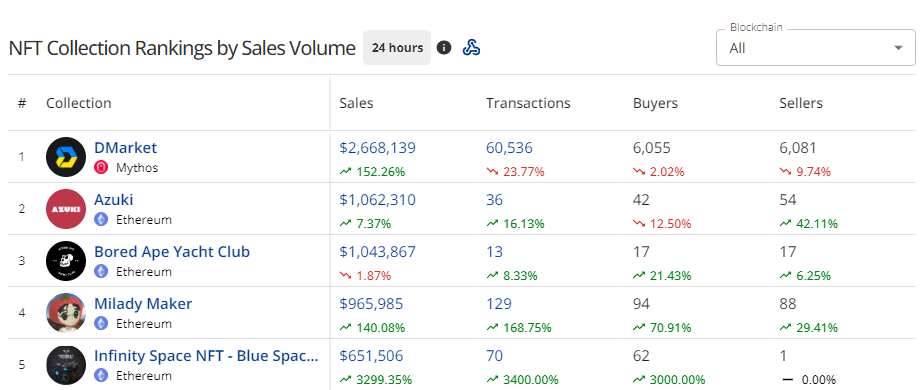
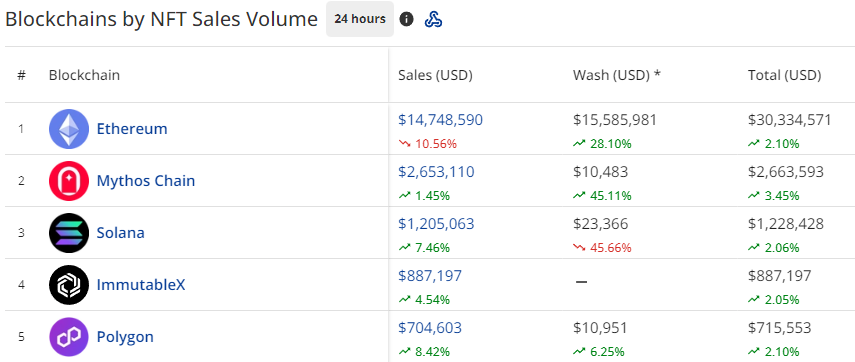
Last week CryptoSlam welcomed a new blockchain to our NFT Collection Rankings and Blockchain Rankings with the addition of the Mythos Chain and their gaming assets from DMarket and NFL Rivals. Just a few days into being listed on CryptoSlam, DMarket with their gaming skins has already found itself in the #1 spot in the NFT Collections Rankings over 24 hours, propelling the Mythos Chain to 2nd place behind Ethereum in the Blockchain Rankings.
From CounterStrike skins to player assets in the new hit mobile game NFL Rivals, mainstream gaming now has some serious representation in NFTs, and this is just the tip of the iceberg. Microtransactions for in-game items are expected to reach over 76 billion in sales this year alone, and currently, gaming asset NFTs make up only a small percentage of that. Gamers and even a large part of gaming media have been turned off by NFTs. It’s easy to understand their skepticism of an industry ripe with scams and profiteering, but it’s time for them to level up their understanding of NFT technology and why it’s such a
game-changer.
I’ll give you a few examples of what excites me about gaming assets as NFTs. Nothing beats trading in-game items like rare guns in Borderlands, legendary armor in Diablo, or any of your rarest finds in your favorite MMO. On the flip side, there’s nothing worse than the feature to trade being
removed due to concerns about duped items. If each item is backed by an NFT (remember, they’re nonfungible) that is validated each time you connect your NFT wallet, that concern is zapped from existence. Forever.
What if I wanted to trade that same rare gun from Borderlands for your car in GTA VI? (Please GearBox and Rockstar. We want NFTs). NFTs make exactly that possible with the click of a button on decentralized marketplaces. This is just a small tease of the future of gaming that’s not just being dreamed up now, it’s actively being built. I didn’t want to mention the financial side of gaming NFTs, but given the hundreds of billions of dollars that game studios and publishers are making, why wouldn’t one be excited for the gamers themselves to get in on the action?
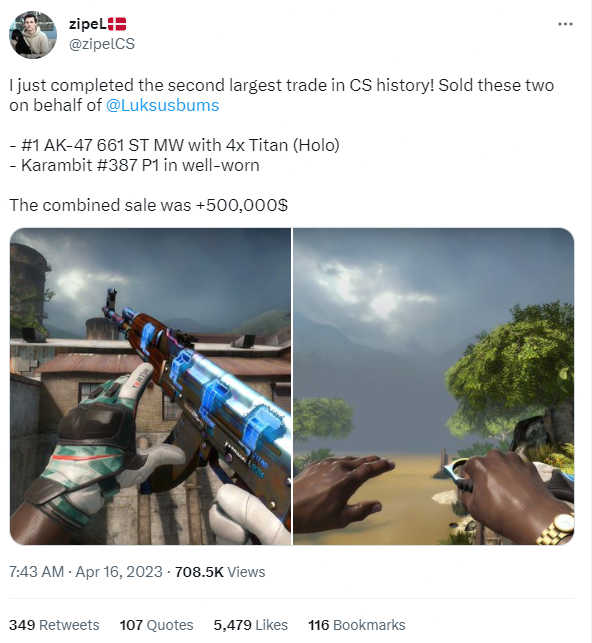
Since the announcement of CS:GO skins migrating to Counter-Strike 2, the gaming world has seen some of the largest secondary skin sales in gaming history, with a single gun skin recently selling for over $400k. The idea of a gaming asset now “living” longer allows game assets to hold a value that would never be possible if they had a shelf life.
And NFTs don’t just give gaming assets longer life. They preserve the asset if stored properly, along with the record of who owns them forever. Yes, even if a game and its servers are decommissioned that asset can live on in decentralized platforms. If the appeal of profiting from your game assets turns you off,
simply keep your asset as a prized trophy that you can look at with nostalgia and maybe share with your kids one day. Video games unraveled NFT’s potential for me when I first dove into the tech over 2 years ago. True digital ownership (not just holding an asset
that lives in some company’s possession), scarcity, and preservation of assets are all baked into a single token that lives on a public ledger called the blockchain. It’s not that NFTs fix an existing issue in gaming, it’s that they buff nearly every aspect of gaming. This is gaming evolved, like going from Pong to God of War: Ragnarok. From Final Fantasy I to Elden Ring. Now, pair NFT tech with creator tools like Minecraft, and Fortnite Creative 2.0 and we’ll see the next chapter of social
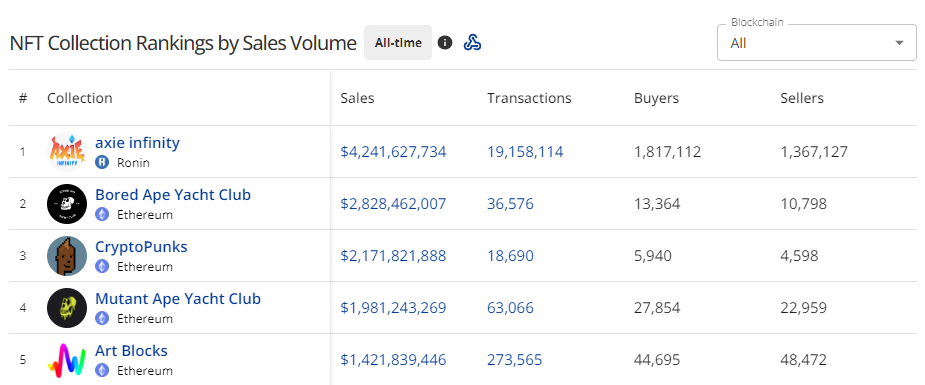
gaming that games like The Sandbox Game, Decentraland, and Yuga Labs’ Otherside are on their way to delivering. We don’t yet see a large representation of gaming NFTs on the all-time top NFT Collection
Rankings yet, but let’s not forget that the top-selling NFT project of all time isn’t Bored Ape Yacht Club or even CryptoPunks. It’s the titan of blockchain gaming, Axie Infinity, which to date has done over $4.2b in secondary sales.
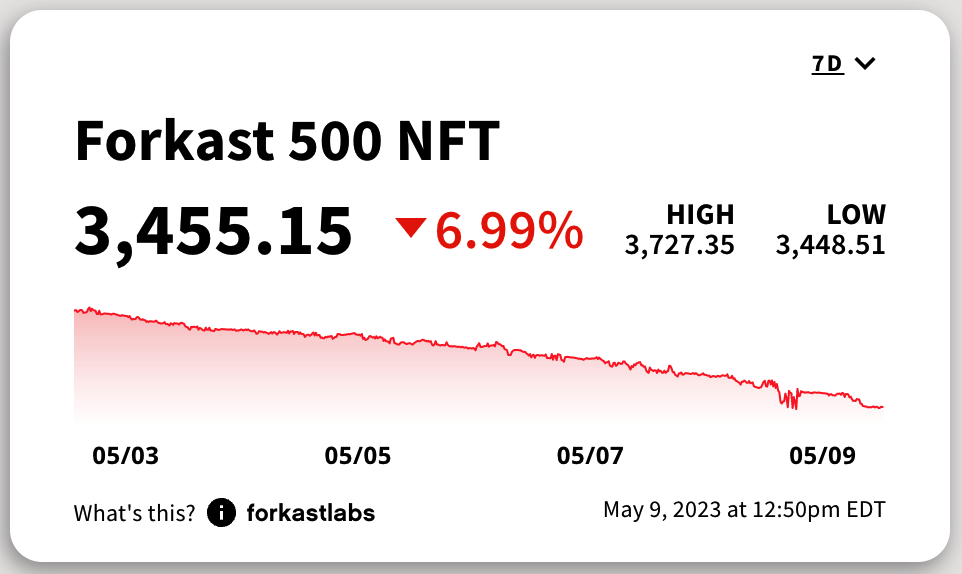
As a gamer for over 30 years, I understand the spirit of gamers who want to keep things pure, but the fact is the times have changed and so has the video game landscape. NFTs are coming to gaming, so it’s the gamers that I’m rooting for, and it’s the gamers who stand to say “GG, NFTs”. The Forkast 500 NFT Index is down nearly 7% in the past 7 days, with NFTs continuing to take a hit from high gas fees. As meme coins are traded at high volume, transacting NFTs has become cost-prohibitive, and many traders are waiting for either NFT prices or gas prices to fall further before buying
back in. |
Skins
are a digital asset that changes the appearance of a digital item. You could have a virtual room with furniture or walls whose appearance can be changed by swapping the skin on it. Skins are common in video games, where in-game weapons, character designs, vehicles, and many other assets can retain their core stats but change their appearance by changing the applied skin. There’s big money in skins (usually referred to as a microtransaction), and plenty to learn about all of their use
cases. Happy Researching! Received this from a friend? Sign up for this twice-a-week CryptoSlam VIP newsletter. |
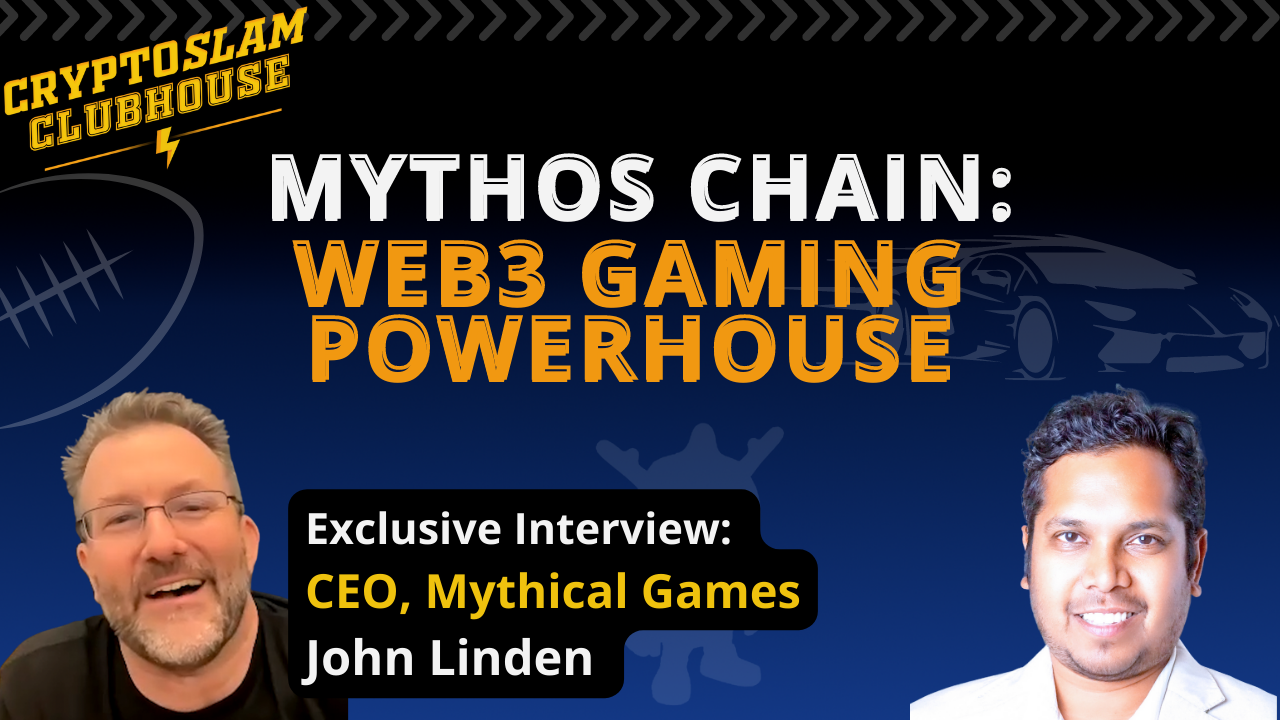
CryptoSlam Clubhouse Podcast Yohann chats with John Linden, CEO of Mythical Games on several items including: • Mythical Games was founded in 2018 to explore the potential of Web 3 gaming economies.
• The company launched Blankos Block Party and NFL Rivals, which are free-to-play games featuring Web 3 elements, like user generated content, and digital ownership.
• To facilitate these experiences, Mythos Foundation created Mythos chain, a permissioned EVM compatible blockchain that enables players to have ownership of assets and access wallet features instantaneously.
• In 6 months, the goal is to rival Ethereum in terms of transaction volume while keeping an average transaction price point of $18 - providing gamers with affordable access to game assets. Watch the full interview now Missed an
Episode? Watch all of our previous episodes on Youtube. Don't have time to watch? Listen to all of our episodes, available now on: |
|